
Two American economists whose ideas sit at the heart of how central banks fight recessions and inflation have won the 2026 Nobel Memorial Prize in Economic Sciences. Robert E. Hall, 83, of Stanford University, and Michael Woodford, 70, of Columbia University, were honoured on Monday, October 12, for research on the “microeconomic foundations of macroeconomic stabilisation”.
The Royal Swedish Academy of Sciences said their work laid a solid theoretical foundation for the models that central banks and governments use around the world. “We are better equipped to deal with shocks in the economy,” said John Hassler, chair of the prize committee.
What they discovered
Hall and Woodford helped build models of the whole economy from the bottom up, starting with the decisions of millions of households and businesses rather than broad rules of thumb. Their work underpins what economists call the New Keynesian approach, which now shapes policy at most major central banks.
- Expectations matter. In a famous 1978 paper, Hall showed that people’s spending decisions reveal what they expect about their future income. Woodford later built this insight into his models of how consumption is determined.
- Interest rates as the main tool. Woodford showed that central banks can steer the economy by setting interest rates, not only by controlling the money supply, as older theories emphasised. His 2003 book Interest and Prices became a standard reference for central bankers.
- Forward guidance. Because expectations shape behaviour, what a central bank says about its future plans can matter as much as what it does today. Woodford’s work helped popularise “forward guidance”, along with the ideas of “sticky” prices that adjust slowly and the “output gap” between what an economy produces and what it could produce.
Woodford told reporters that stabilising the economy is not simply a matter of “people pulling levers”, and that what the public understands about policy is just as important. He said clearer signals about the likely path of interest rates became a key part of the response after the 2008–09 financial crisis.
Who are the winners?
Hall, an emeritus professor at Stanford and a senior fellow emeritus at the Hoover Institution, chaired the committee at the National Bureau of Economic Research that officially dates US recessions for more than three decades. He has advised the US Treasury, the Justice Department and the Federal Reserve Board. He called the prize “a wonderful surprise”.
Woodford is the John Bates Clark Professor of Economics at Columbia and a former co-editor of the NBER Macroeconomics Annual. Both men have long been associated with the NBER, which says 45 of its current or past researchers have now won the economics prize.
Why it matters now
The award comes at a testing time for the ideas it honours. Central banks are dealing with an energy-price shock linked to the war involving Iran, only a few years after the post-pandemic inflation surge of 2022. The US Federal Reserve raised interest rates in September for the first time since 2023, and its new chair, Kevin Warsh, is known as a sceptic of forward guidance in uncertain times.
The prize, formally the Sveriges Riksbank Prize in Economic Sciences in Memory of Alfred Nobel, was created by Sweden’s central bank in 1968 and first awarded in 1969. It is worth 12 million Swedish kronor, about $1.2 million, shared equally between the two laureates. It was the last of this year’s Nobel announcements. Last year’s prize went to Joel Mokyr, Philippe Aghion and Peter Howitt for their work on innovation-driven growth.
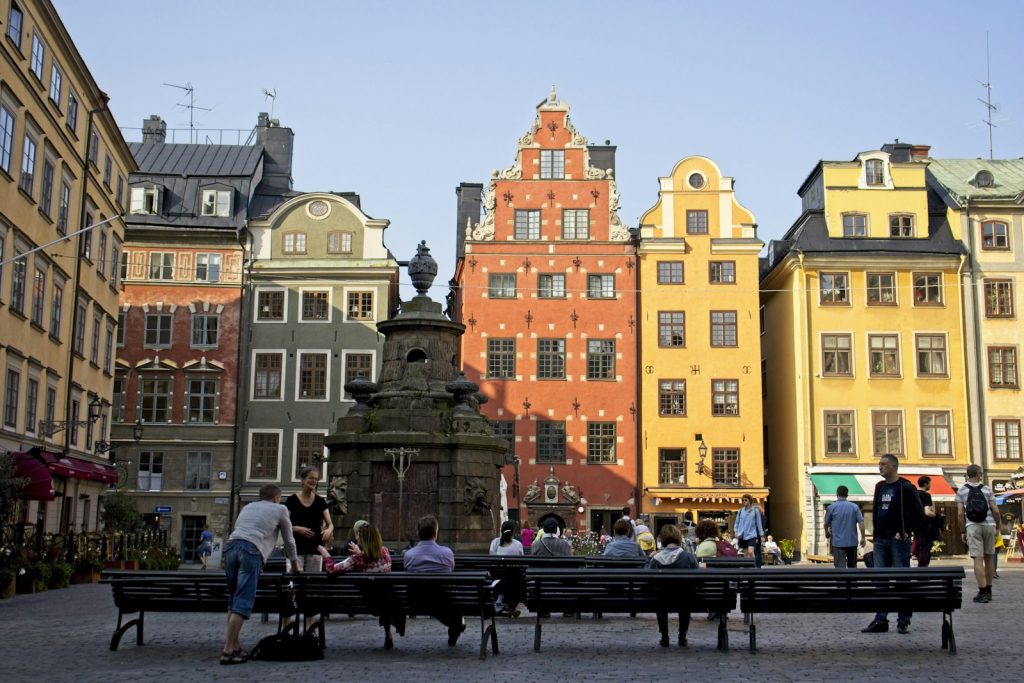
The laureates will receive their awards in Stockholm on December 10, the anniversary of Alfred Nobel’s death.
Sources
- NBER — Robert Hall and Michael Woodford awarded 2026 Nobel Prize
- Reuters via TimesLIVE — Nobel economics prize awarded to Hall and Woodford
- Reuters via Al-Monitor — Hall, Woodford win Nobel prize for work on how to stabilise economies
- Blue News — US economists awarded the Nobel Prize in economics
- The Irish News (PA) — Nobel memorial prize in economics awarded to Robert E Hall and Michael Woodford