
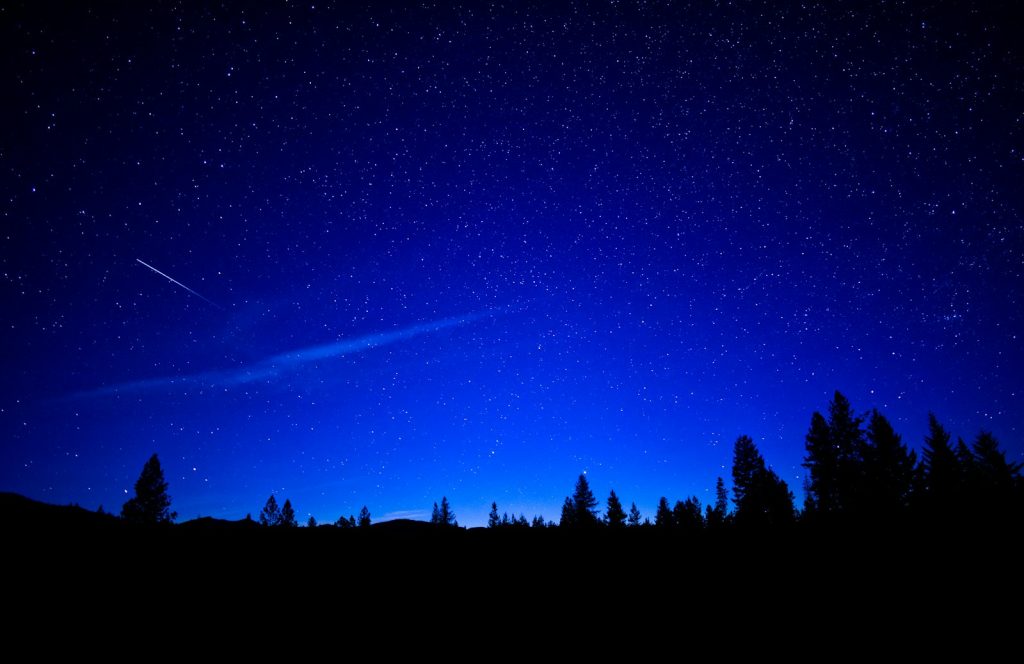
One of the year’s most reliable meteor showers reaches its peak this week. The Orionids, made of dust left behind by Halley’s Comet, are expected to be at their best around October 21, and the pre-dawn hours on the mornings either side should offer the best views.
The key facts
- Active: September 26 to November 22.
- Predicted peak: about 18:00 UTC on October 21 (around midnight in Bangladesh), with a broad maximum spread over several nights.
- Rate: roughly 10 to 20 meteors an hour under a dark sky. Recent displays have been modest, so treat any higher numbers as a bonus.
- Speed: about 66 kilometres a second, which makes Orionids fast and often leaves glowing trails.
- Source: Halley’s Comet, which orbits the Sun about every 76 years and last passed close to Earth in 1986.
When and where to look
The meteors appear to come from a point near the raised club of the constellation Orion, north of the reddish star Betelgeuse. Orion rises before midnight and is highest in the sky around 2am, so the best viewing is in the hours before dawn.
This year the Moon is a factor. A waxing gibbous Moon will be in the sky in the evening and after midnight during the peak, setting a few hours before sunrise. Waiting until moonset gives the darkest sky and the best chance of seeing fainter meteors. The full Moon follows on October 26.
How to watch
- Get away from lights. A park, rooftop or rural area away from street lighting makes a big difference.
- Give your eyes 20–30 minutes to adjust to the dark, and avoid looking at your phone screen.
- Look up, not at Orion. Meteors can appear anywhere in the sky; those seen away from the radiant tend to have longer trails.
- Be patient and comfortable. Lie back on a mat or reclining chair and dress for the cooler pre-dawn air.
- No equipment is needed. Binoculars and telescopes narrow your view too much for meteor watching.
The Orionids are visible from both hemispheres, so viewers from Dhaka to London and Sydney can take part. If clouds spoil the peak, the shower’s broad maximum means the following mornings can still deliver.