
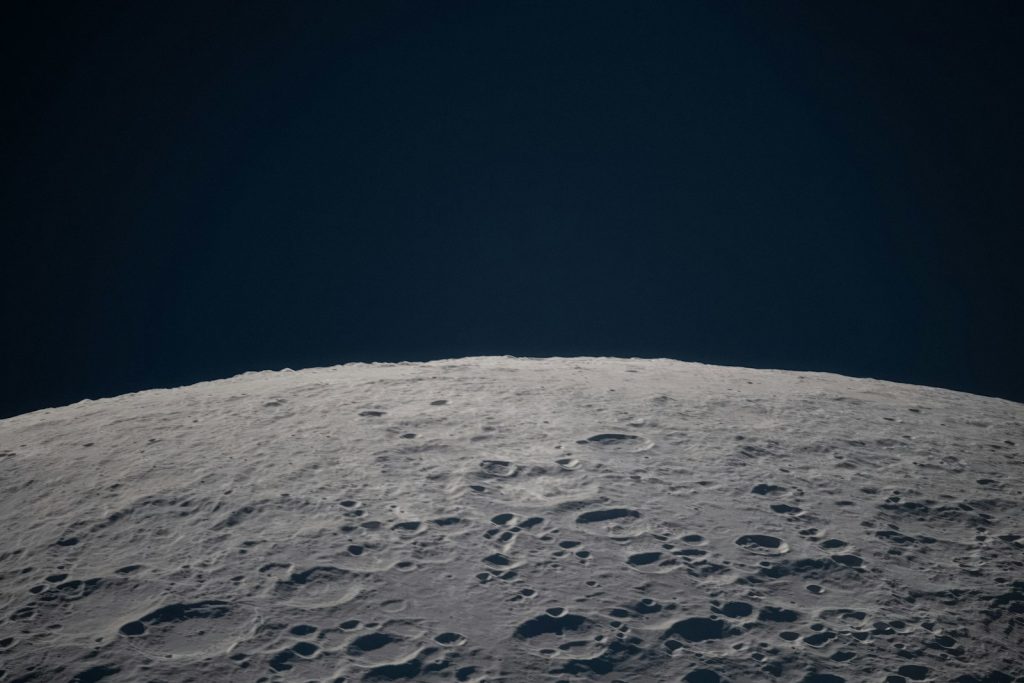
China has abruptly postponed Chang’e-7, its most ambitious robotic Moon mission yet, just a day before it was due to lift off from the Wenchang launch site on Hainan Island. In a one-sentence statement on Sunday, August 23, Chinese space officials said the spacecraft “does not meet the conditions for launch” after a comprehensive assessment.
Why the delay?
No technical reason was given. Reports linked the decision to Typhoon Narra, whose strong winds were lingering near Hainan, while some analysts noted that a recent failure of a smaller Long March rocket shares an engine family with the Long March 5 that will carry Chang’e-7. Officials have not confirmed either explanation.
The timing matters because launches to the lunar south pole can only happen in narrow windows that open once or twice a year. With none left in 2026, the mission is now widely expected to slip into early 2027. No new date has been announced.
What Chang’e-7 is designed to do
The mission stacks four spacecraft on one rocket:
- An orbiter to map and survey the polar region from above.
- A lander targeting a ridge near Shackleton crater, close to the south pole.
- A rover to study the surface and soil around the landing site.
- A small hopping probe designed to leap into permanently shadowed ground, look for water ice and return, something no spacecraft has done on the Moon.
Six international instruments are on board, from Bahrain and Egypt (a shared hyperspectral imager), Thailand, Russia and Italy.
Why water ice matters
Ice trapped in the Moon’s coldest craters could one day supply drinking water, oxygen and rocket fuel for astronauts. Chang’e-7 is meant to confirm whether that ice exists in usable amounts and to scout the area China has chosen for a future research station, part of a programme that aims to land Chinese astronauts on the Moon by 2030.
The delay also tightens an emerging race. NASA is planning to send science instruments to the south pole on a commercial lander, and the two efforts could now arrive on similar timescales. For now, mission teams must wait for the next suitable launch window.