
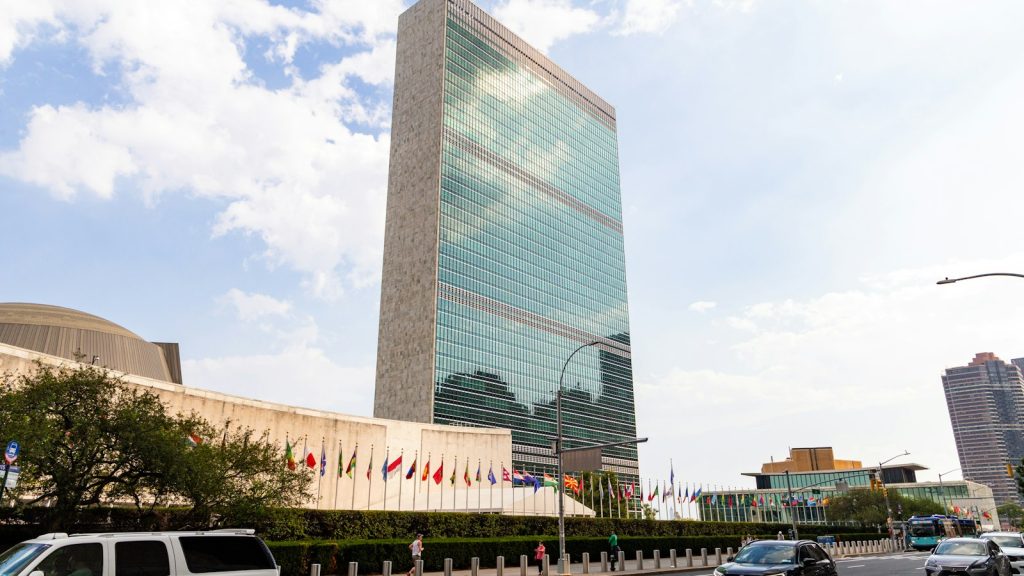
World leaders are gathering in New York for the high-level week of the 81st United Nations General Assembly, which opens on Tuesday, September 22. Nearly 130 heads of state and government are expected to address the chamber against a backdrop of wars in the Middle East and Ukraine, a deep funding squeeze at the UN and an unresolved race to choose its next secretary-general.
The schedule
The general debate runs from Tuesday to Saturday, September 26, and resumes on Monday, September 28, with no session on Sunday. Speakers are asked to keep to a voluntary 15-minute limit, a request many ignore. This year’s theme is “Restoring trust, managing transformation: a United Nations that delivers for all.”
Secretary-General António Guterres opens proceedings with his annual report — expected to be his last, as his term ends on December 31. The Assembly is presided over by Khalilur Rahman of Bangladesh, who took office as President of the General Assembly on September 8.
By tradition dating to 1955, Brazil speaks first, followed by the United States as host country. President Donald Trump is expected to take the podium on Tuesday morning.
Side meetings during the week include sessions on the right to development (September 23), sea-level rise (September 24), pandemic preparedness (September 25), the 25th anniversary of the Durban Declaration against racism (September 28) and the elimination of nuclear weapons (September 29).
Visa row over Palestinian delegation
For the second year running, the United States has denied visas to Palestinian officials. Member states voted to allow President Mahmoud Abbas to address the Assembly by prerecorded video. The UN says the denials violate the Host Country Agreement, which obliges the US to admit delegations travelling on UN business.
What leaders are expected to talk about
- The war with Iran and the closure of the Strait of Hormuz, which has driven up energy prices worldwide.
- Ukraine, where Russian strikes on energy infrastructure continue.
- Artificial intelligence and how it should be governed.
- The UN’s finances, strained by unpaid dues and cuts to contributions.
Who will be the next secretary-general?
No decision is expected this week. The General Assembly formally appoints the secretary-general, but only on the recommendation of the Security Council, which is still holding informal straw polls. All nine secretaries-general so far have been men, and several Council members want a woman to be chosen.
Seven candidates remain: Rebeca Grynspan (Costa Rica), Carolyn Rodrigues-Birkett (Guyana), Ivonne Baki (Ecuador), María Fernanda Espinosa (Ecuador), Rafael Grossi (Argentina), Macky Sall (Senegal) and Olara Otunnu (Uganda). Former Chilean president Michelle Bachelet withdrew after winning support from only one of the 15 Council members.
In the latest straw poll, Grynspan narrowly led, with nine members encouraging her candidacy, five discouraging it and one expressing no opinion. Rodrigues-Birkett received eight encouragements, six discouragements and one no-opinion. A successful candidate must avoid a veto from any of the five permanent members.
Why it matters
The UN has grown from 51 members in 1945 to 193 today. General Assembly resolutions are generally non-binding, but the annual gathering remains the one place where almost every government speaks to the world — and where much of the real diplomacy happens in meetings on the sidelines.